Boredom and Burp Suite: How I Accidentally Compromised Hundreds Of Gyms
It started as a way to kill time during my internship and ended with a panic, a rogue SQL server, and a deeper understanding of responsible disclosure.
By week four of my internship at an MSP, I’d burned through my task list. I needed a new target while waiting for the next project assignment - something low stakes to keep my brain engaged. That’s when I opened the app for the gym chain I go to, to analyze traffic, because why not.
While analyzing the traffic, I stumbled upon a specific backend server: local-gym.saas-services.com. What immediately caught my eye was how incredibly legacy it looked compared to their modern main site. It felt like a relic they had forgotten to decommission, which usually means one thing: older code and unpatched vulnerabilities.
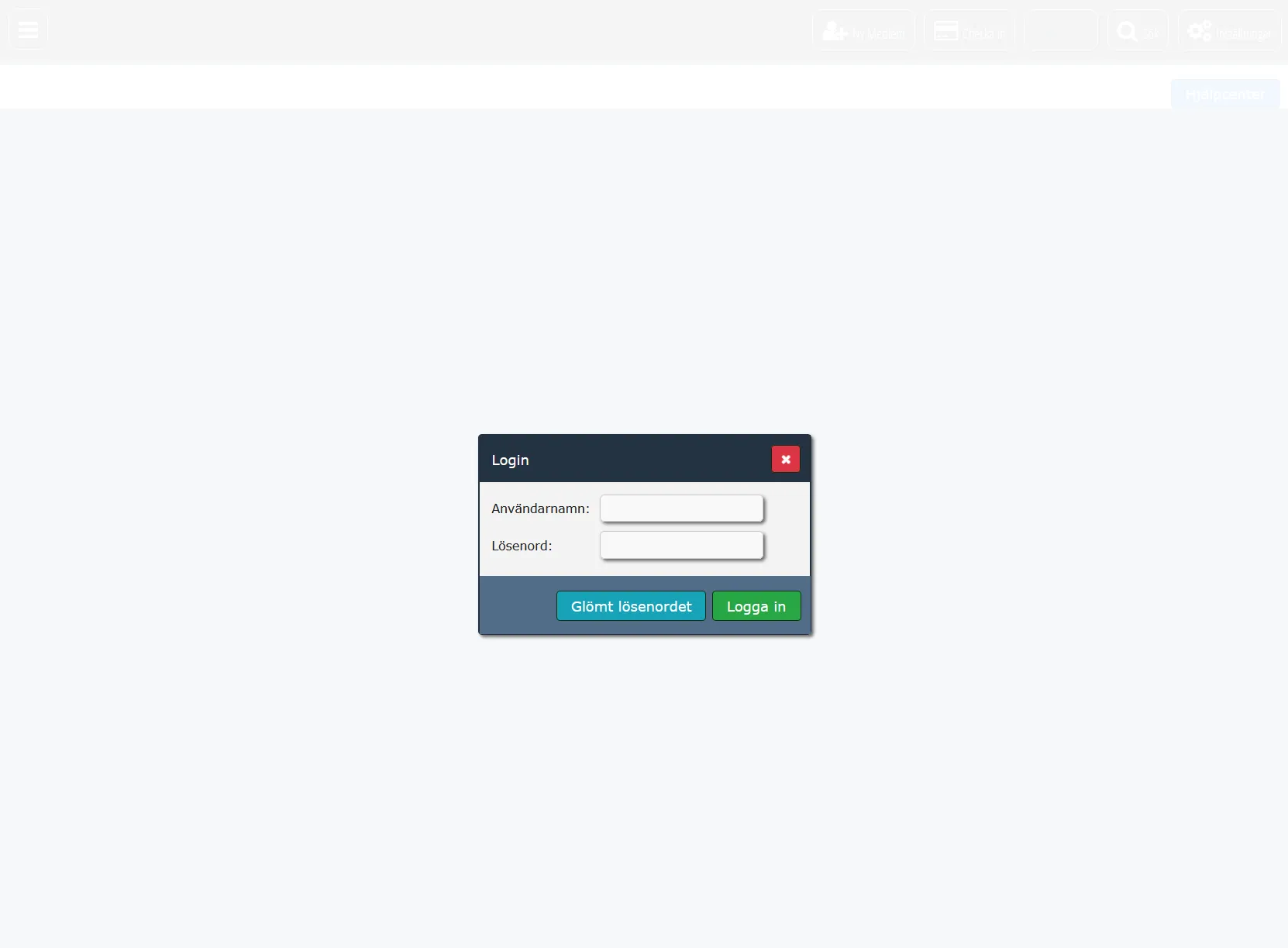
That “gut feeling” about the legacy interface is what kicked off this entire chain of events.
Part 1: The Keys to the Kingdom
I started by mapping out the API endpoints associated with this legacy subdomain by digging through the very old JS. Lots of JQuery and blobs of non-obfuscated and formatted Javascript. It didn’t take long to find a function constructing a request to json/defaultpage.ashx with the command getsettings.
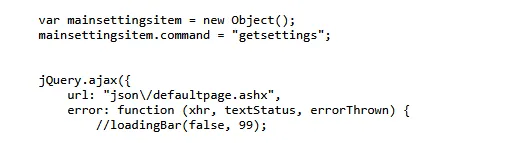
I sent the request via Burp Repeater without any session cookies to see what I’d get.
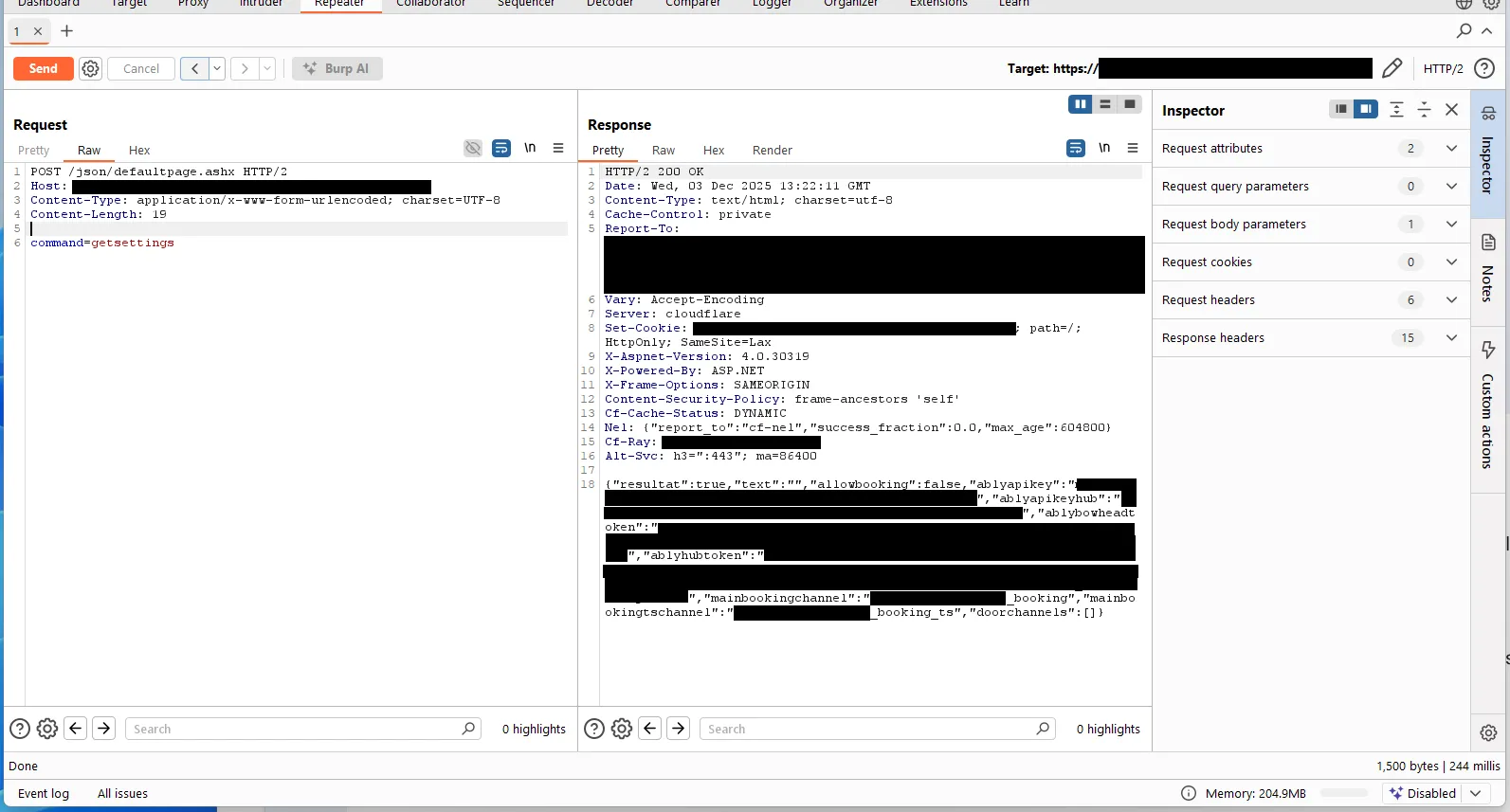
The Response:
{
  "resultat": true,
  "ablyapikey": "ROOT_KEY_HERE",
  "ablybowheadtoken": "...",
  "doorchannels": []
  ...
}
It returned a full Ably API Key with Root Scope.
To verify the severity without disrupting operations, I first attempted to publish a “ping” message to a completely non-existent, isolated channel (test_channel_aldin). If the system was secure, this would fail. It didn’t. The message went through, confirming I had Write Access.
With that confirmed, I subscribed to the [meta] channel to check the scope. My console immediately flooded with real-time events from hundreds of gyms across Sweden. It wasn’t a dead key. It wasn’t a key only for this specific gym. It wasn’t even read only. I had write-access and visibility into the entire SaaS platform’s nervous system.
The Disclosure & Permission
At this point, I stopped testing immediately.
I wrote up a report detailing the Ably Root Key leak and sent it to my contact, the CTO. I explained the severity: total lack of tenant isolation.
He responded quickly. They rotated the keys immediately. Crucially, in our email exchange, he acknowledged my skills and gave me explicit written permission to continue probing their infrastructure to see if there were deeper issues.
Part 2: The Rogue Database Pointer
With the green light to proceed, I returned to the domain with a more aggressive mindset.
I ran a directory fuzz using ffuf and a standard wordlist. I quickly found a hit: /setup/.
Unlike the legacy main site, this endpoint served a modern Bootstrap interface. It was an unauthenticated installation wizard. Because the domain used a wildcard certificate, I could access this wizard on any random subdomain I invented (e.g., temp-test.saas-services.com/setup/).
The wizard allowed me to configure the site’s Hostname and, crucially, the Database Connection.
The Exploit: Hijacking the Connection
The setup form didn’t verify if the database was local or trusted. It just accepted whatever IP address I gave it.
-
I spun up a VPS and ran a Python script acting as a “Rogue SQL Server.”
-
I entered my VPS IP into the gym provider’s setup form and clicked “Save.”
-
The SaaS platform immediately tried to authenticate with my rogue server.
The Impact:
My Python script captured the incoming connection. I successfully grabbed the MSSQL username and password hash that the platform used to connect to its production databases.
To verify this wasn’t just a fluke, I later set up a legitimate MSSQL server on my VPS and let the platform connect. It began running its initialization script, creating tables and populating a schema on my server. I could view the entire database structure, including other hardcoded API keys (which were thankfully dead/inactive).
Conclusion
This engagement highlighted two important lessons:
-
Legacy Subdomains are Goldmines: That initial hunch about the “old-looking” server led to the highest severity findings.
-
Communication is Key: Stopping after the first finding and establishing clear rules of engagement with the CTO turned a standard bug report into a deeper, sanctioned security audit.
The company patched the /setup/ endpoint by adding authentication and scrubbing the legacy API keys. They even sent me a gift card as a thank you - proof that ethical hacking pays off.